You’ve got the fast speech rules in American English—contractions, assimilation, elision, etc. Your pronunciation is clear, and expression isn’t an issue. Yet, you still notice a difference: you speak slowly and less smoothly compared to a native speaker. Have you ever wondered why? The answer lies in the tongue. It needs to be both flexible and stable, which helps you control your speed, while also ensuring your speech sounds natural and smooth. Think of your tongue as the accelerator, determining how fast or slow your speech flows. With the right placement and movement, it can achieve both flexibility and stability. Let’s look at why this matters and how to practice it.
The tongue has three main parts: the tip, the body, which includes the blade, and back, and the root.
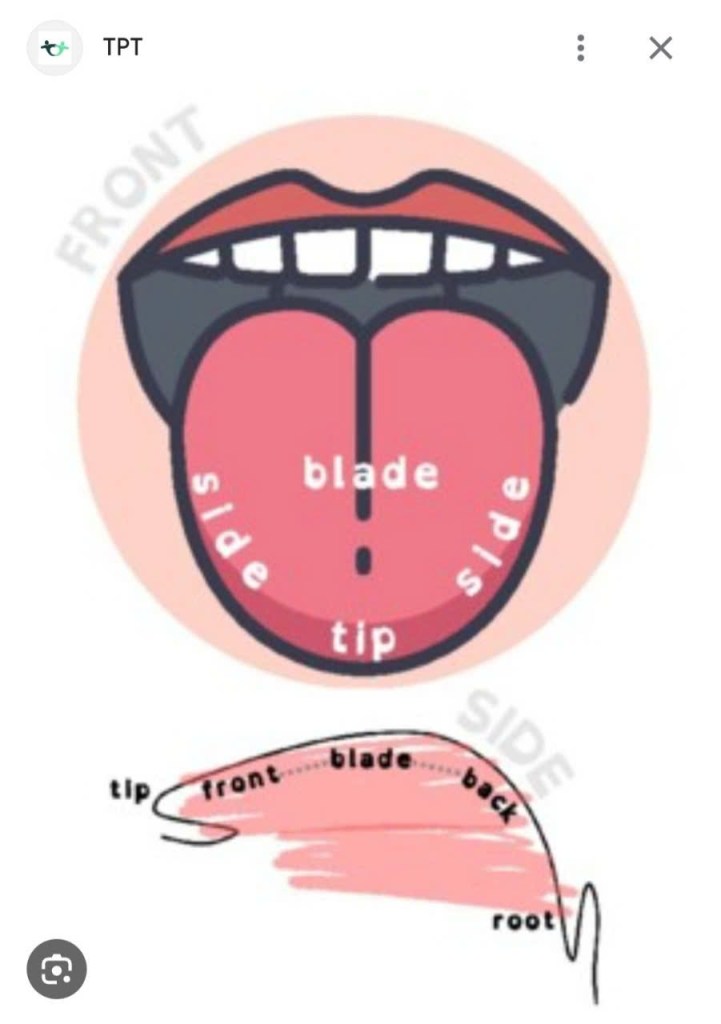

When you’re about to speak, your tongue should be in a “tall” position. Specifically, the body should be slightly raised from the floor of the mouth, the tip should rest comfortably behind the bottom teeth, and the back should form a gentle arch near the roof of your mouth. From here, the blade moves subtly in various directions for different sounds. In this position, the tongue is closer to the front of the mouth, near the lips, teeth, and roof, which makes enunciation easier and faster.
The key is to keep the tongue stable but flexible when moving. Without stability, it loses control; without flexibility, it gets rigid. You need to balance both by understanding the roles of the root and the blade and how they work together. The root, which attaches partly to the floor of the mouth and partly to the throat, provides stability. Think of it as an anchor that keeps your tongue’s movements under control, steady but not tense. If the root is rigidly tied down to the floor of the mouth or the back is raised too high, it restricts the rest of the tongue and makes your voice sound unnatural. If you feel tension, that’s a sign to relax.
Once you have that stability, the blade needs flexibility. This is the most active part, doing most of the work in forming sounds. Its movements should be smooth and effortless to allow easy transitions between sounds. It doesn’t need to be aggressive or forceful, which would only slow you down and make your speech sound choppy or heavy. Keeping movements small and consistent helps you sound more natural and prevents your speech from feeling forced. When this part moves smoothly within a gentle range, you’ll notice faster, easier transitions between syllables, making your speech flow comfortably.
As you speak, focus on the tongue and let the other articulators take a passive, supportive role. Picture the tongue as standing tall and comfortable as you speak—this will help your speech become faster and sound more natural. Avoid dropping your lower jaw too much, as this can make the root unstable. Don’t overuse your articulatory muscles, or your tongue will become tense and stiff. And most importantly, use your breath to raise the tongue forward. When you inhale, the tongue muscle (genioglossus) naturally moves forward, making the tongue “taller”.


To ensure that the body and root of the tongue are relaxed, check the lingual frenulum (the strip under the tongue). If it’s tight, it indicates tension in the tongue. The frenulum should feel comfortably extended as you speak.

In conclusion, balancing your tongue’s flexibility and stability is key to achieving native-like fluency. While there are lots of details to keep in mind as you practice, it really comes down to visualizing your tongue standing tall and relaxed. If it slips out of this position, use your breath to help you regain control.
 Begin life at forty
Leave a comment