While looking for something to do to beat boredom, my friend suggested we watch the Quintessence of Tonkin show, and I immediately agreed. We were picked up at 5:30 PM and spent 45 minutes on the bus to get there.
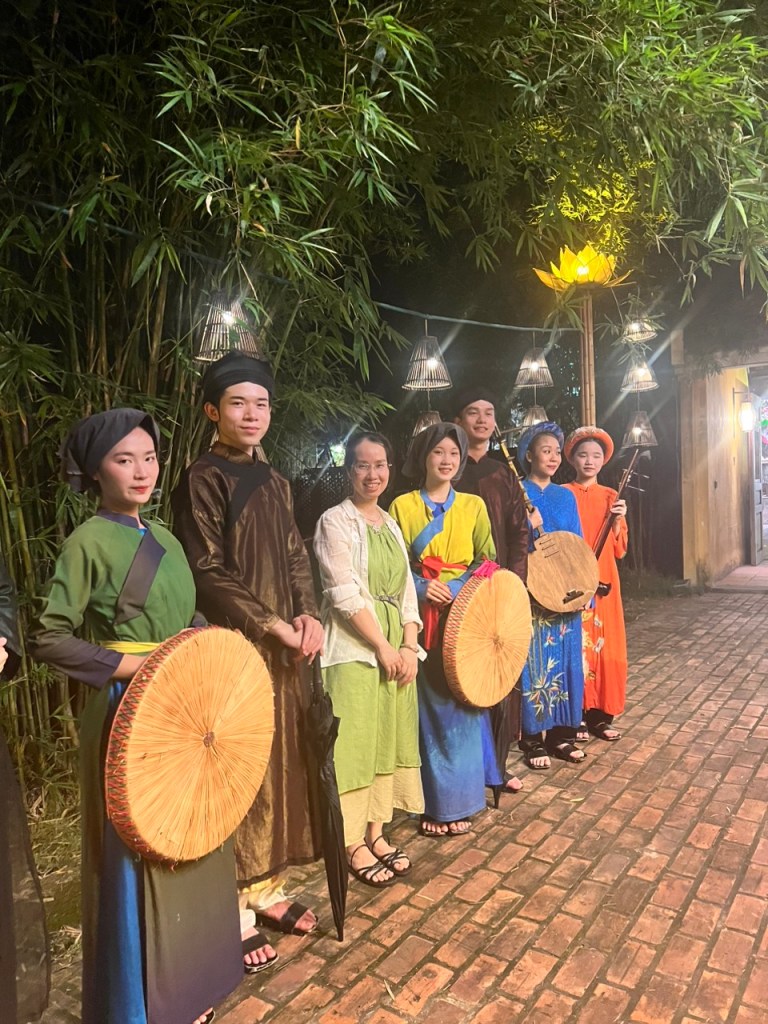
The venue has two main areas: the performance space, which was closed until the show started, and an open market area called “Chợ Quê,” resembling a traditional market with stalls selling Vietnamese foods and snacks. There, we were treated to a complimentary traditional Vietnamese family meal, which included boiled water spinach, clear soup (water from boiling the spinach), fried tilapia fish, and fermented eggplants. Had I known about this market, I might have skipped this free meal, which wasn’t entirely free as it required a minimum purchase of four tickets. The market used with coupons instead of cash. I bought five coupons, each worth 20,000 VND, but later realized it would have been better to buy coupons of different values since you don’t get change for cheaper items. I bought steamed sweet potatoes, garlic butter bread, and green tea. The sweet potatoes were good, but the bread was disappointing—dry and made with margarine instead of butter. The meal area also had a stage where artists performed traditional singing, dancing, and acting, showcasing typical Vietnamese culture.


When the show was about to start, we lined up for check-in.


The show offers three types of tickets: Platinum, Gold, and Regular. Platinum tickets are the most expensive and come with separate, premium seating at the back, which is covered and equipped with fans. Gold and Regular tickets have access to the same unnumbered seating area; the only advantage of Gold tickets is a closer entrance, giving holders a better chance to choose their seats first. We chose seats at the back, just behind the Platinum area, where we benefited from the breeze from the Platinum area’s fans, which was great on that hot, humid night.
As the name suggests, the show introduces core aspects of Vietnamese culture, specifically those of the Red River Delta, through scenes of daily life, music, paintings, and celebrations. It also illustrates the examination process for students, highlighting the celebration of the top scholar, and emphasizing the respect and significance of academic traditions. The show highlights Vietnamese cultural, spiritual, and religious elements, such as lotus flowers, Buddhism, the Female Goddess Worshipping (Đạo Mẫu), and puppetry. A notable feature of the show is the participation of a large number of performers, including local farmers and professional artists, performing on a large water stage set against the natural backdrop of Thầy Mountain and surrounded by bamboo trees. The stage creates a peaceful village scenery, harmoniously blending with the performance. Artistic lighting, music, and traditional instruments add excitement to the show.
Through the show, audiences gain an understanding of how closely Vietnamese culture is tied to agricultural activities like rice planting and fishing. Real buffaloes, boats, and traditional farming tools on stage vividly represent the daily work of farmers. The show also offers insight into Vietnamese art through folk songs, traditional musical instruments, and Đông Hồ paintings – folk art known for their handcrafted prints, created using carved wooden blocks.
While I found the show interesting, it didn’t leave a deep impression because it was hard to identify standout moments. The show lasts only 45 minutes, making it difficult to explore each aspect in depth. As a Vietnamese, I found it challenging to fully grasp the aspects presented, so it might be even more confusing for foreigners, especially since the show is entirely in Vietnamese, except for a brief introduction on a projector. While the show aims to convey a sense of peace and simplicity, I personally found it rather sad. The depiction of a life with few comforts and limited entertainment made me reflect more on past struggles than on the intended tranquility and artistic beauty. The performers’ costumes in muted colors, the dark night setting with glimpses of light, folk songs, traditional music, and the lack of modern elements evoked a nostalgic and somewhat melancholic feeling about past hardships. The buffaloes brought on the stage, however, looked so healthy and well-fed that they seemed to be living a good life – an amusing contrast to the humble farmers.
Another downside was the weather. It was extremely hot and humid, making it uncomfortable, especially for someone like me who sweats easily. We sweated a lot during dinner, so I recommend checking the weather and choosing a cooler day to attend the show. Also, it’s better to use the transportation included in the ticket price instead of going on your own. The food there is typical Vietnamese, including noodle soups and Vietnamese crepes, but you might want to bring your own food if you prefer Western options.

In general, the show was an interesting experience, but it left me feeling sad about people’s harsh and dull life back then, rather than the peacefulness and relaxation the shows aims to convey. Or it might be that because I was feeling unhappy, it was hard for me to see the show in a more positive light.
 Begin life at forty
Leave a comment