Tag: Vietnamese Culture

  • Daily life: Uhm…I look old

    Monday, April 8, 2024

    In the morning, I attended two online classes back-to-back; staying focused for 3 hours straight with just a few minutes of break was challenging. Then, I had a simple breakfast of leftover fried rice made by my mom before taking meds. Was pretty unproductive after that. 

    In the afternoon, I booked a Grab motorbike to go to the hospital for acupuncture. The gloomy weather made me feel hesitant at first to go out, but still managed the trip. Booked another Grab ride to return home, enjoying some awesome discounts on my trip through the app.   

    For dinner, we enjoyed a special dish prepared by my dad, who takes great pride in his cooking skills, especially when it comes to traditional Vietnamese cuisine. His specialty tonight is called “Giả cầy”, a kind of stewed pork. The main ingredient is pork, preferably from parts like the feet, legs, or shoulders, which have a good amount of fat alongside lean meat. The fat from these cuts doesn’t taste greasy. The pork is marinated with various minced herbs, including a unique one with a distinct flavor, called galangal root. Additionally, the dish features a sour element called “mẻ”, a fermented product of cooked rice, providing a pleasant acidic flavor. Another key flavor comes from “mắm tôm”, or fermented fish paste. The combination of these three main stuff gives the dish its distinctiveness and makes it stand out from other stewed pork dishes. Oh, I almost forgot to mention that the pork skin is fire- roasted before stew. Traditionally and, still in rural areas, it is roasted with rice straw, giving it a smoky aroma. However, in cities, I guess people use a liquefied gas torch, which still guarantees the dish is cooked to perfection.

    We typically pair this dish with a special herb called “lá mơ” (cheese leaves or skunk vine leaves), creating a wonderful mix of flavors. Today, we ate “Giả cầy” with rice noodles instead of rice. My whole family loved the meal and raved about how delicious it was.

    After dinner, I went for a walk and encountered a group of preschool kids playing together. They greeted me, and when one little girl addressed me as “bác!”, it hit me: “Uhm..I already look old.” In Vietnam, we rely on age to address each other in social relationships. A female can call herself or be called either “em”, “chị”, “cô”, “bác”, or “bà” in various situations. If she is called “bác”, it means she is only younger than “bà”, but older than the rest. While using age-related terms shows respect, it can accidentally draw attention to age, especially for older women. In contrast, simply using “I” and “You” in communication in the US greatly helps avoid emphasizing age. One reason I still see myself as young there as the majority of people in my neighborhood and my social circles are older. My best American friends are seniors. But most importantly, in American culture, people don’t experience social pressure growing old.

    P/S: In friendships, if someone is called “Bà”, it doesn’t mean she is very old; it’s simply a friendly form of address.

  • Lunar New Year’s Eve 2023

    Since I moved to the US, S and I have established a tradition of celebrating Lunar New Year’s Eve on a video call with my family in Vietnam.

    At the special moment marking the transition of time from one year to the next, we said “Chúc Mừng Năm Mới!” which means “Happy New Year!” and felt honored to receive the wishes for good health and happiness from my parents. We in turn gave them the same wishes. Though I’ve been hearing the same greetings and wishes for Tet (Vietnamese name for Lunar New Year) since I was young, they are always special to me because they come from my parents. And even the enthusiasm and joy in their tone of voice and expression, not just the words themselves, make their wishes more special.

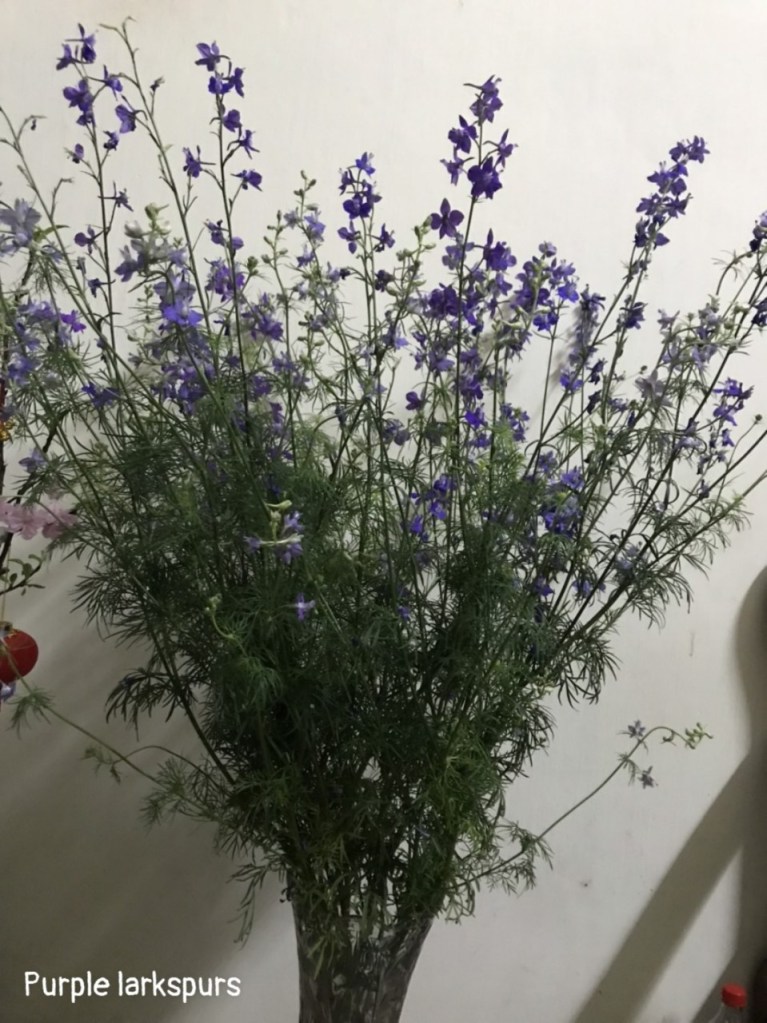
    The most exciting part of the call was when my Mom showed us what she had prepared for Tet from decorations, foods to snacks. This year, she had a big kumquat tree that was full of leaves and fruit and a bunch of vases with purple larkspurs and sword lilies which are typical flowers for Tet. The vases looked great but they were missing dahlias – my favorite flower from my childhood. My Mom said she didn’t get them as they don’t last very long. This issue can be fixed easily in the US as flower stores commonly sell flowers with nutrition packs which keep them fresh for a week without even changing the water. However, fresh flowers in the US can’t ever be as healthy and vibrant as the ones in VN, as they are sold at markets in the morning, as early as at 4 a.m. right after they are picked.

    Then she showed us the peach blossoms. Unlike every other year, this year was the first time my parents bought the whole tree instead of a branch. And it was also the first time, the flowers were soft pink instead of the usual red. I prefer red blossoms, probably because they hold sentimental value for me and remind me of my memories of Tet. Peach blossoms and a kumquat tree are essential decorations for Tet in the Northern and Central regions, while in the South, yellow apricot blossoms are used instead of peach blossoms. Without them, the Tet atmosphere isn’t complete.

    Next, she showed us small trays of snacks which were already set out on the table for the Eve celebration and for guests and relatives when they come over during Tet. Then, my Mom walked into the dining room and showed us her fridge fully packed with food. She had “Giò Bò” (a type of beef ham), “Giò Lụa” (a type of pork ham) and “Giò Tai” (a type of sausage made from pork ears and black fungus), “Nem chua” (I call it “Vietnamese Salami” due to the similarity in fermented meat texture), buffalo jerky and beef jerky, and all kinds of other delicious foods that I couldn’t remember the names of. She also showed us boxes of grapefruits that she complained were too many but no one but her ate. The food tour kept going when she showed us the foods and fruits on the altar. I saw “Bánh Chưng” (square-shaped boiled sticky rice filled with green beans and pork) and “Xôi chè” (a sweet sticky rice dish cooked with concentrated ginger juice). In my memory, “Giò Lụa, “Giò Tai ” and “Bánh Chưng” are traditional foods that we always have on Tet, and “Xôi Chè” is my paternal grandmother’s favorite dish. Since she passed away a long time ago, we never forget to offer her that dish on the altar on Tet.

    Growing up, I always thought Tet was so boring, repetitive and “too much work”. I would try to be away from the family’s activities whenever I could so that I could stay in my own space. I knew that this had upset my Dad a lot but I had reasons for not actively participating in the event with my family.

    Anyway, now that I’ve been living in the U.S. for an extended period, I really want to be a part of the festival, experiencing flowers, foods, decorations and the festive and family-gathering atmosphere. It’s going to happen soon!