On the day of our visit to Bat Trang Pottery Museum, I was tired because I slept late the night before. I was in a rush to get to the museum, and forgot my phone and wallet. I had to borrow money from my friend, KA to cover the taxi and everything else during the visit.
The museum has a distinctive design, resembling a group of pottery wheels. The building features the walls with an undulating, wave-like pattern that mimics the smooth curves of pottery being shaped. This is enhanced by the earthy brown color of the walls, like the natural hue of clay, which adds a touch of raw authenticity. This color complements the stonish gray tiles in the front courtyard, creating a harmonious and soothing atmosphere, ideal for a ceramics & pottery museum. The overall design offers a cozy and welcoming environment for visitors.

The first floor is an array of shops displaying and selling a variety of ceramic products and knick-knacks, including vases, cups, decorative pieces and artistic sculptures. The ceramics are beautifully crafted with intricate and delicate details. Prices are reasonable as well.

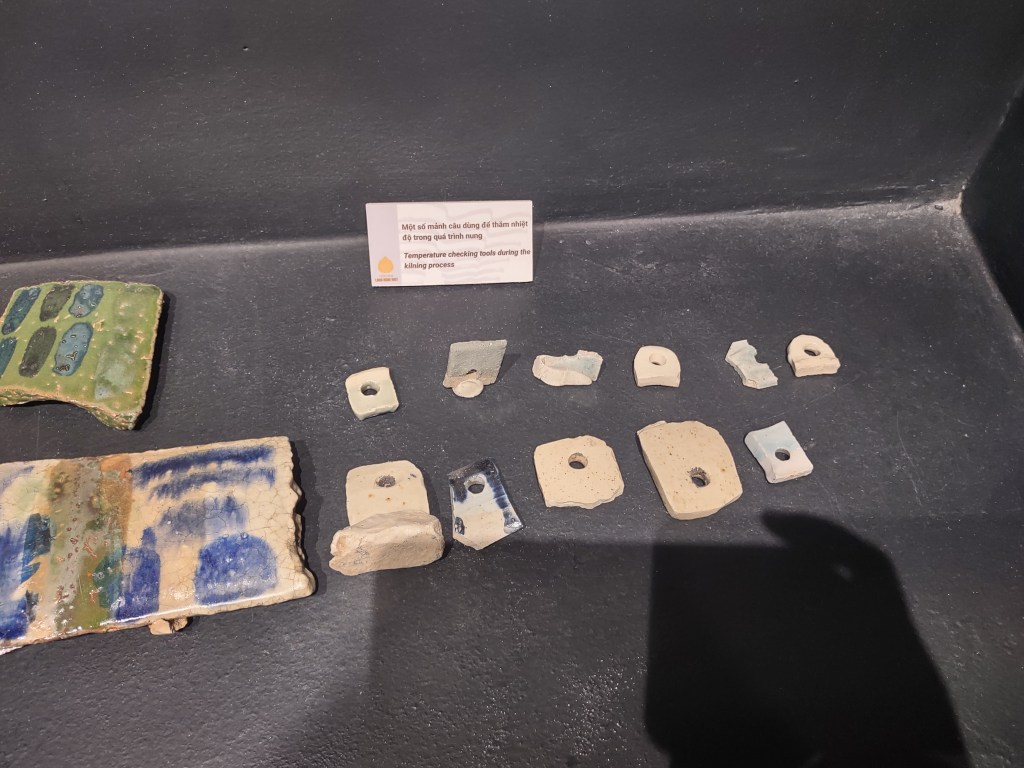
After exploring the shops, we moved to the second floor, which serves as the museum’s main center. This floor is divided into areas with different focuses. One highlights artistic pottery works, while another showcases the evolution of pottery production. This section allows visitors to observe the changes in colors, techniques, and shapes in making pottery across different periods, providing insight into the development and characteristics of pottery throughout history. The last space details the pottery-making process. Here, you can see traditional tools used in pottery, remnants of products tested for color, and patterns and statues depicting various stages of pottery creation, such as throwing, glazing, and molding.


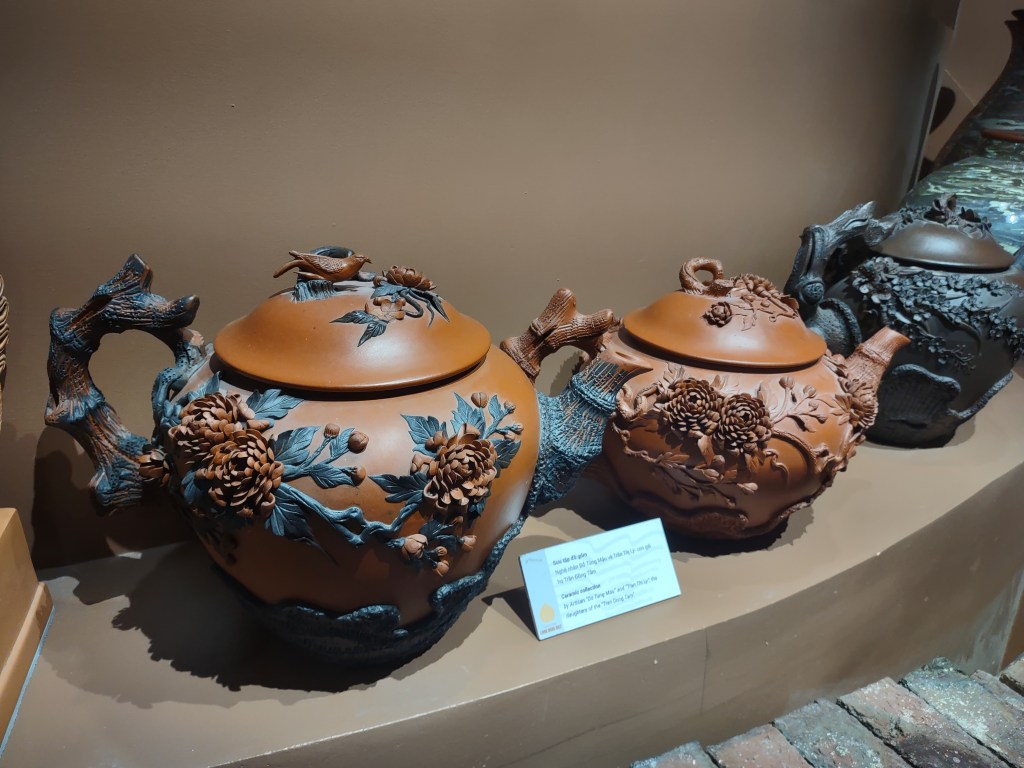


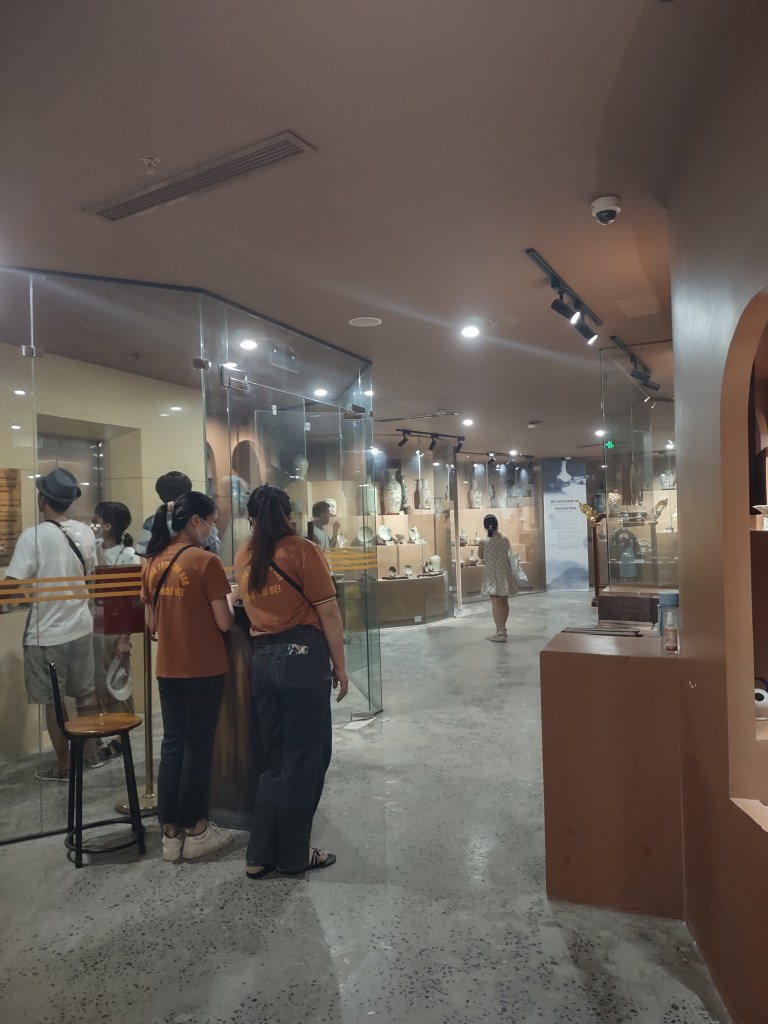



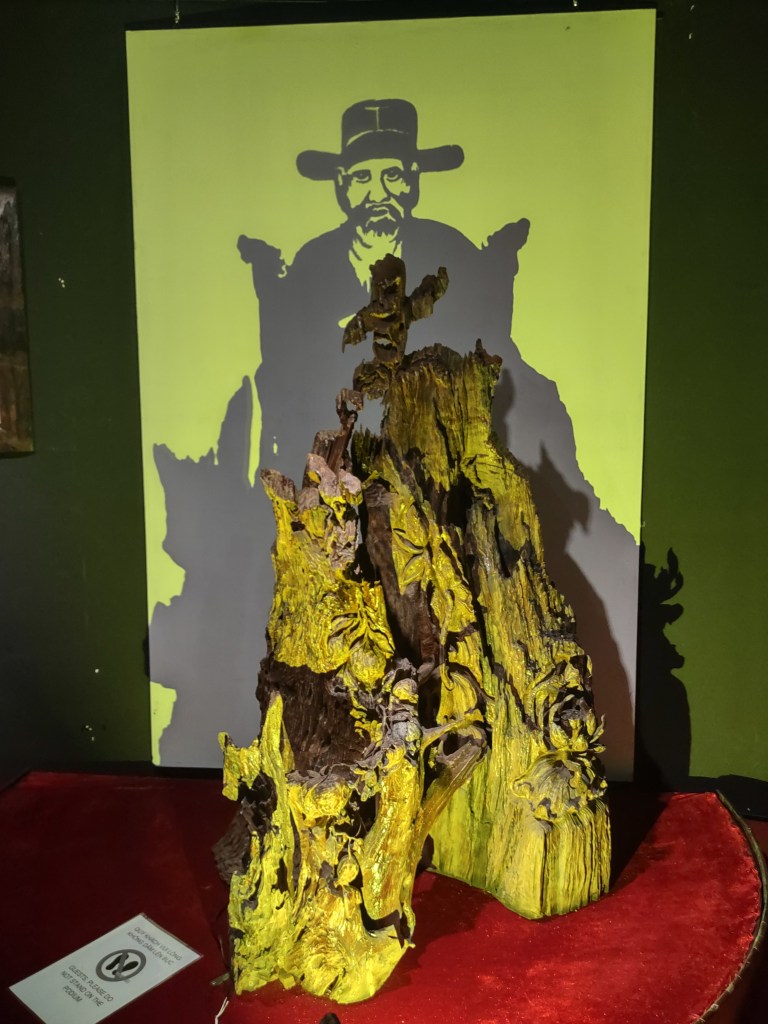
On the third floor, we explored the light sculpture art exhibit. This section features handcrafted wood in various shapes and forms, illuminated to highlight famous Vietnamese individuals who have made significant contributions to the nation’s development. Additionally, there is a sculpture created from recycled materials, designed to raise awareness about environmental protection and the importance of recycling. This piece, depicting a pregnant woman with her belly symbolizing the Earth, conveys a message about nurturing and protecting our planet. It emphasizes that, while waste can become mere trash, recycling of materials can turn them into something valuable.




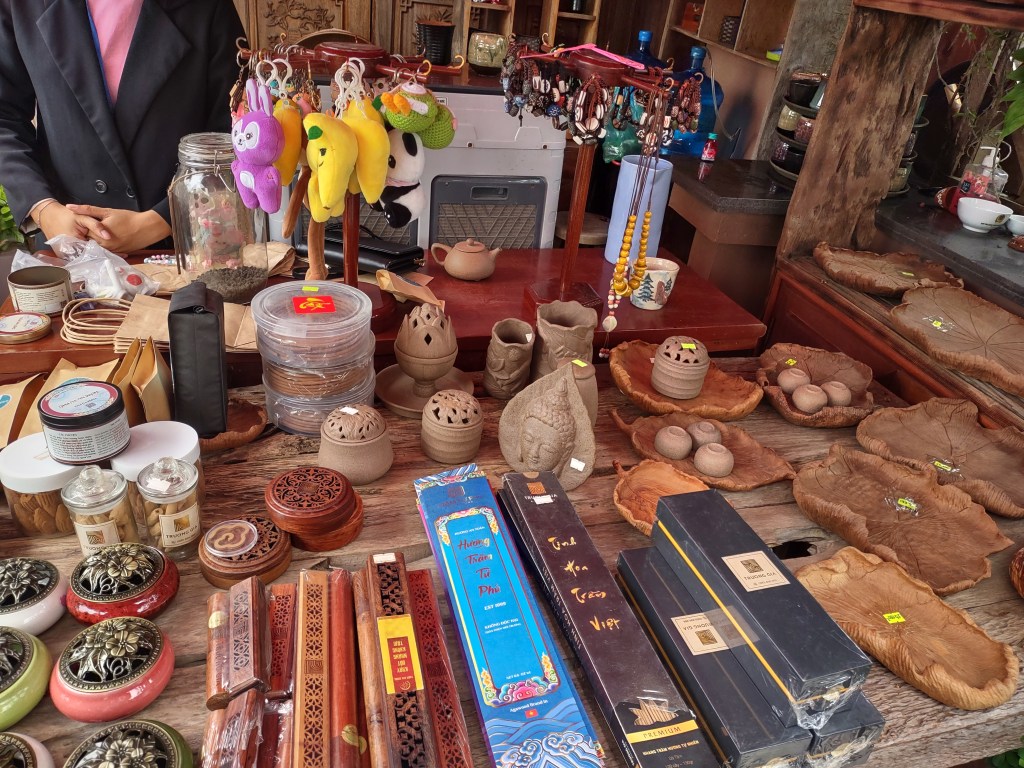
On this floor, there is a small area selling small ceramic products and spiritual decorative items. I was particularly interested in some incense types. According to a staff member, these incense cone-shaped pieces are 100% natural and clean, made from wood particles ground into powder and mixed with glue. The type of wood used determines the aroma of the incense. They offer two types: one made from jade wood (gỗ Ngọc Am) and the other from agarwood (gỗ Trầm Hương). I had tried agarwood incense before, but the scent just didn’t do it for me, even though it’s considered valuable and popular. On the other hand, the jade wood incense smelled nice, but I didn’t end up buying it because it made too much smoke, which was hard for me to enjoy and relax. I also considered buying an artistic incense holder. It was beautiful, but the design was impractical, as the holder was quite deep, making it inconvenient to place the incense cone inside.
Next, we went to the fifth floor, where people expect to experience a serene environment while having tea, but we were quite disappointed when we arrived. The whole space is open, except for a small area, about 6.5 feet deep where shoes are required to be removed at the door. I didn’t bother taking mine off since I could see everything clearly from the entrance. The area has a meditative vibe, featuring decorative items, crafted objects, and artistic pieces arranged to create a calming atmosphere. However, there wasn’t anything particularly special about it. It feels more like a decorative setup than a real tea-serving space. I did like the vase of lotus flowers at the entrance, though. The tea-serving experience was quite disappointing. It felt rushed because the staff offered us tea as soon as we arrived, before we even had a chance to settle in. No one offered us a second serving. It was more like a tea tasting than an actual tea service. Additionally, there was a small stall selling tea and spiritual products. I did purchase a bag of special black tea with ginseng essence. It was much more expensive than regular types of tea, but I accepted it as part of the experience during our visit.


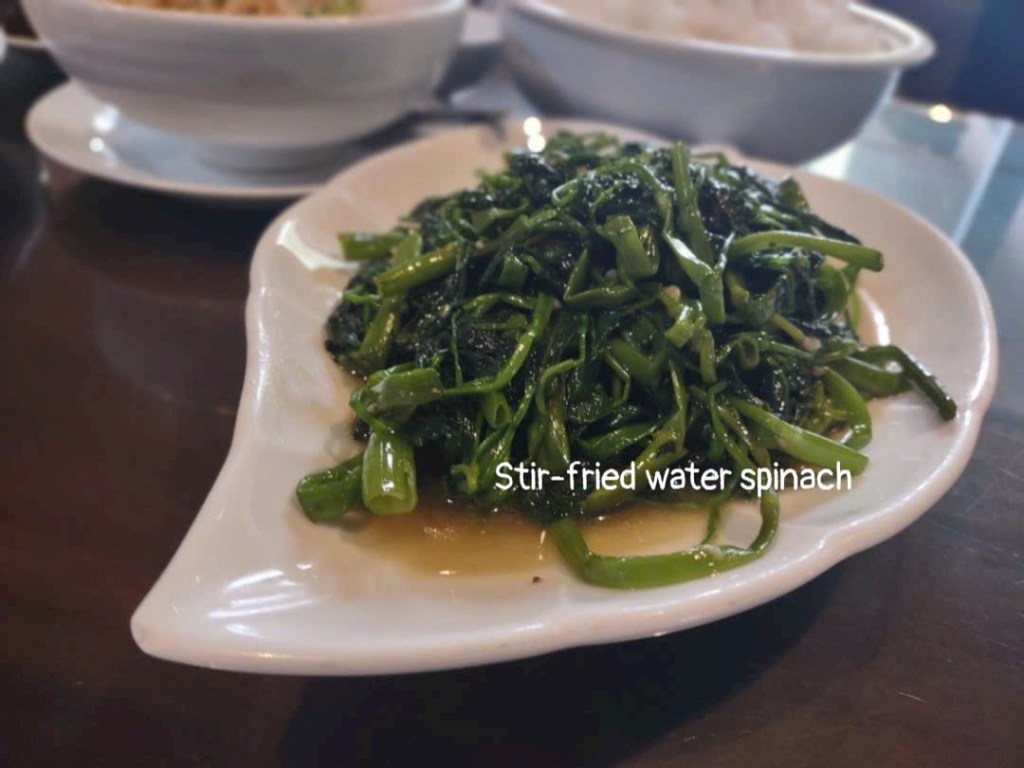
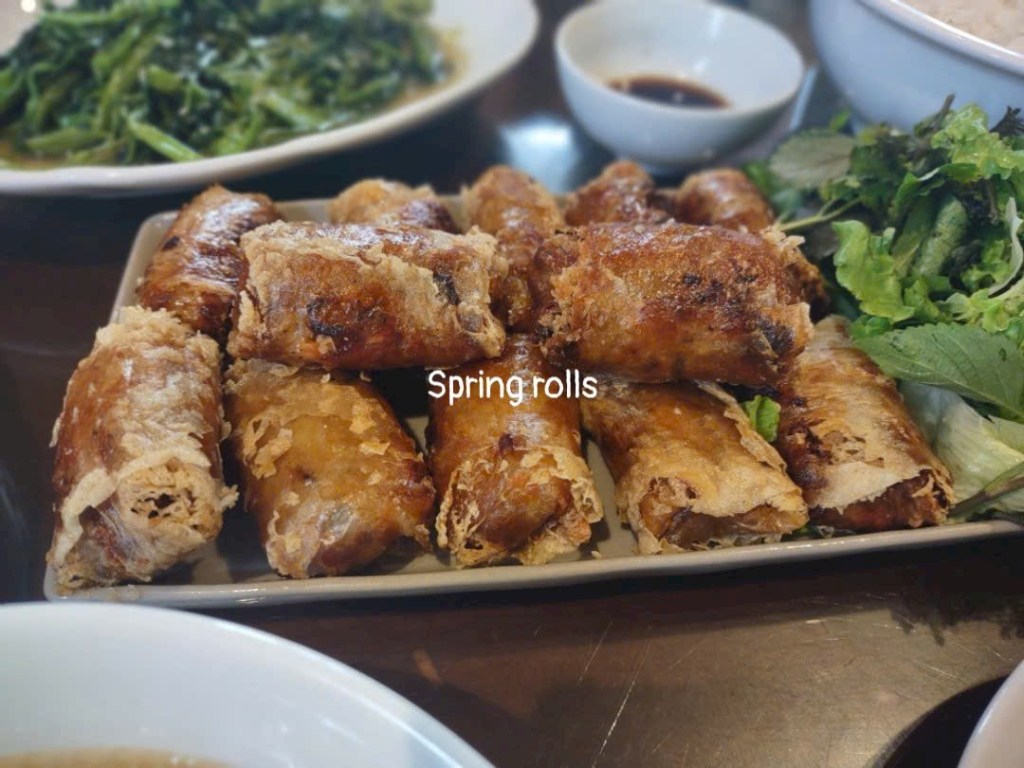
We quickly left the tea space and headed to the restaurant on the fourth floor to have lunch. We ordered fried water spinach, fried tofu in soy sauce and green onions, a bowl of rice, dried bamboo shoot and squid soup (a specialty of both the restaurant and the pottery village), and meat sausage in lolot leaves (Lá lốt). I really enjoyed the meal; everything was so delicious. We also ordered spring rolls. The dishes were served generously and abundantly, and three of us couldn’t finish all the food. I think we only ate about a third of the meal. I could’ve eaten a lot more but I wasn’t in the mood for food that day. Anyway, one ordering tip there is to ask for half portions. You don’t have to order a whole dish, as one portion is quite generous and plentiful.



The coffee and ice cream space is located in an open area right next to the restaurant. I initially wanted coffee, but the variety of ice cream flavors looked so tempting that I decided to go for ice cream instead. I got three scoops: Thai tea, matcha, and rum raisin, and that was the minimum order. Although I loved it, I couldn’t eat a lot at once.
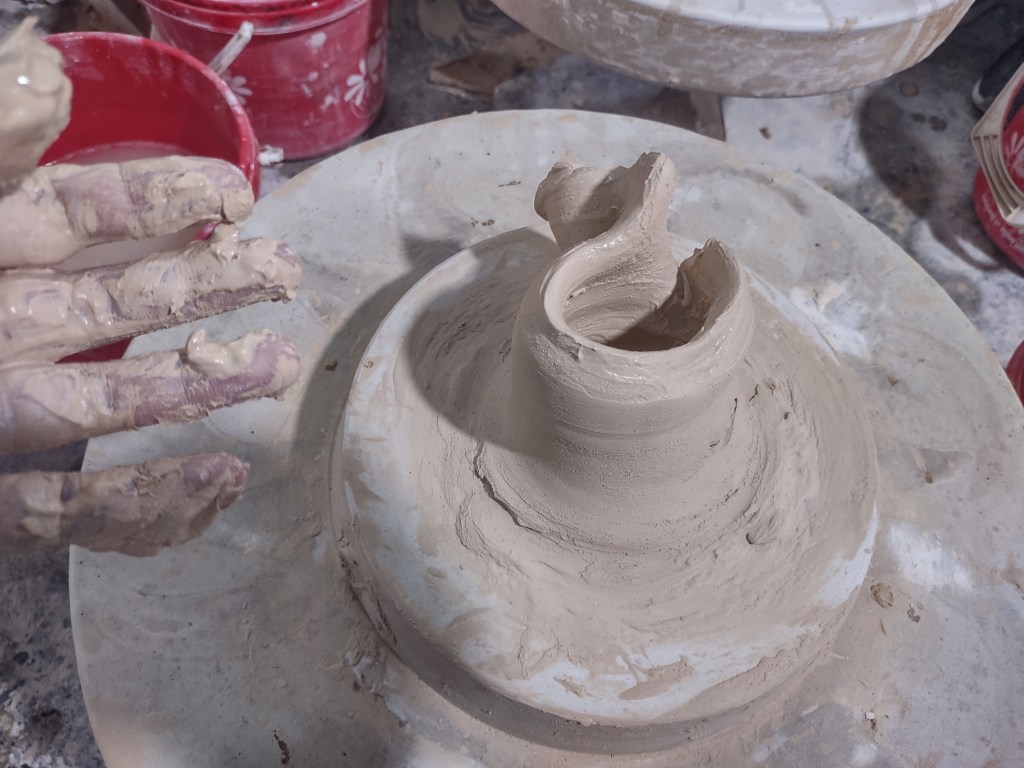
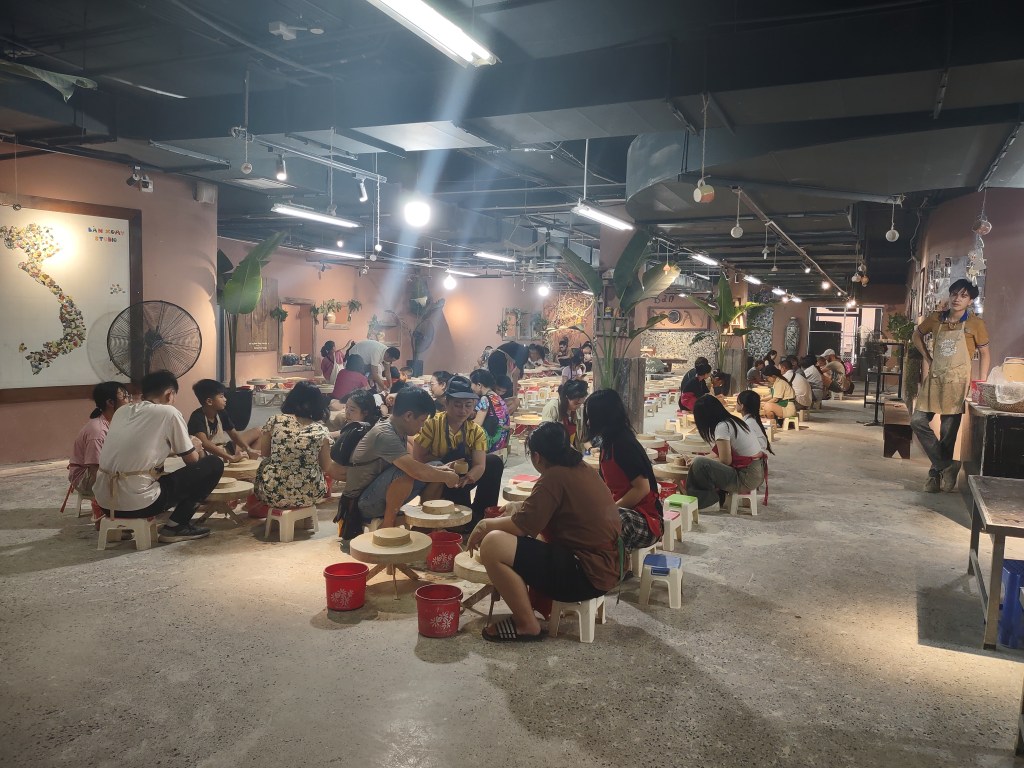
We spent about 15 minutes there before quickly moving to the basement to enjoy a hands-on experience with pottery. First, we watched an educational video on how to craft pottery. After that, we were instructed to wear an apron and showed our tickets at the counter. The staff then gave us some clay to start our experience. I decided to try making a cup, but it turned out to be much more challenging than I had expected. My hands got very messy, and I struggled to shape the clay the way I wanted. Feeling tired and losing focus, I didn’t want to continue. A staff member came over to help, and with his assistance, I finally managed to create a cup that was ready to be painted. There are two options for painting your product. If you just dry it, you can paint it with regular materials. However, if you choose to fire your product, different materials will be used to glaze it. This option requires an extra fee and a waiting period of about two weeks for the product to be shipped.
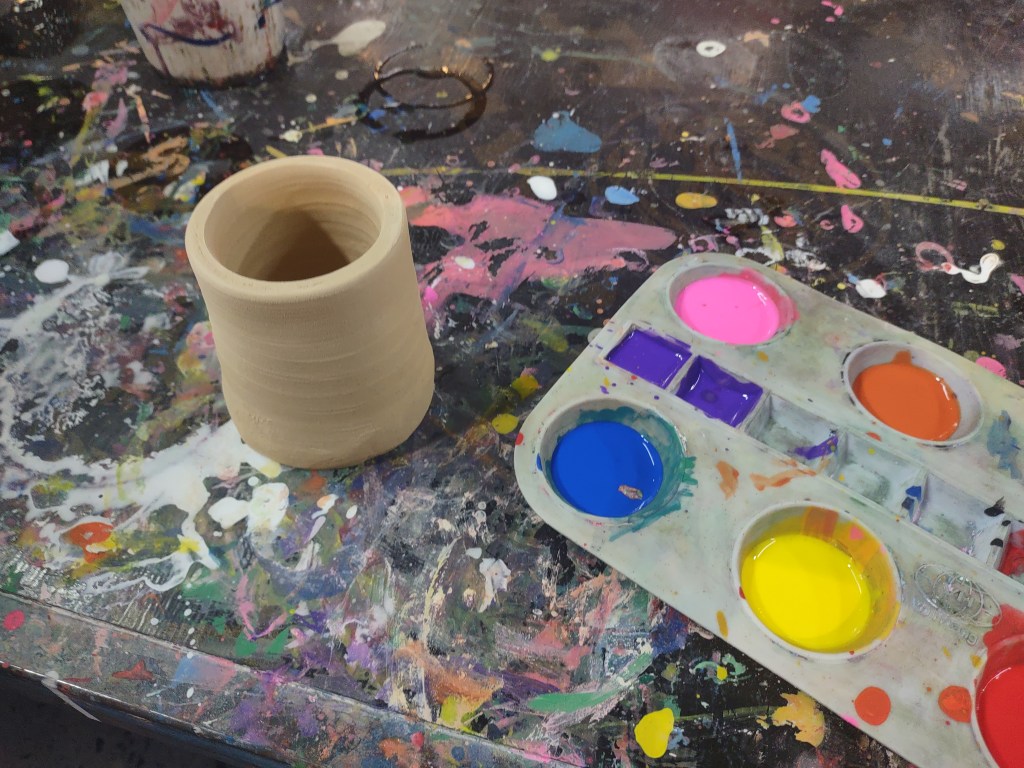
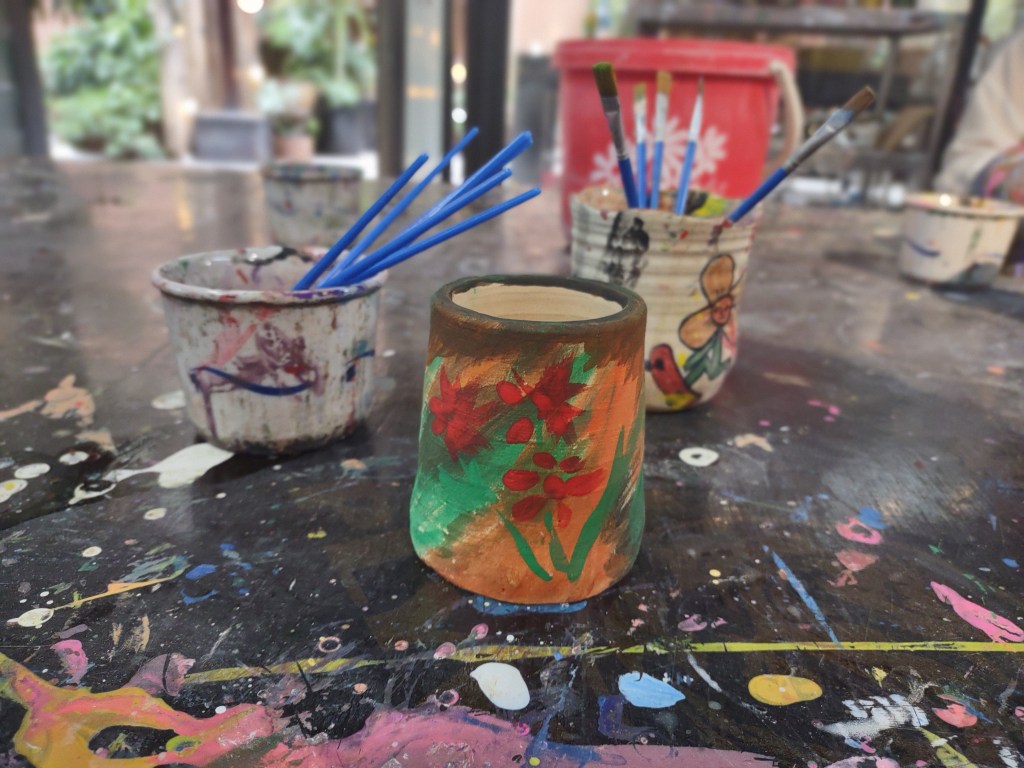
When we moved to the painting area, I felt kind of worn out just looking at the cup. I couldn’t think of any initial idea, so I just painted “tired” on it with a yawning mouth and sleepy eyes. The cup looked ugly. Seeing my friend patiently painting a flower on her cup, I decided to cover up what I had painted earlier, which felt negative. I used three different colors—brown, green, and earthy orange — and brushed and mixed them on the cup. This way, I didn’t have to think too much about the design or worry about details. I quickly painted some flowers, using broad strokes to suggest their shapes rather than carefully drawing each petal. In the end, my cup didn’t turn out too bad. It looked quite artistic to me.
In this area, I also bought a necklace for my mom. According to the staff, the beads are glazed using a special firing technique that will create different tones and patterns at different temperatures. I’m not sure of the exact name of the enamel, but I think it’s called “Men hỏa biến.” The necklace looks okay, but I think it would look much better if the entire string was covered with small beads. With only a bit more than half of the necklace covered, the string is left exposed. However, given the small payment, I guess that’s all I could expect. I also got sweet butter popcorn, which was great. I really love this snack. Unlike in the US, salted butter popcorn is much more common and easier to find.
I enjoyed the visit because I love ceramics and pottery. The museum’s design is impressive; the history and development of pottery are cool; the food is delicious and reasonably priced and the pottery-making experience is fun. Tickets are available at various prices; we chose the most expensive one, VND198,000 ($7.83) per person, which includes access to all areas and the pottery-making experience. However, the museum is pretty small, so there isn’t much to see. Also, I really think the space about the history and development of pottery production is the the most valuable part worth the fee. Additionally, the museum is located quite far from Hanoi’s center, making transportation inconvenient. Traditional taxis are expensive but seem to be the most readily available option. I didn’t see any motorbike taxis (xe ôm), and booking a ride through an app like Grab took forever. Public transportation is an option, I have never tried it though.
In summary, if you don’t mind the small size of the museum, and are interested in ceramic products and the culture of ceramic production, it’s definitely worth a visit. You can learn about the culture, see a lot of ceramic products, and buy them at reasonable prices, all in one place without having to travel far. Also, the nearby traditional pottery market is another great spot to check out.






























 Begin life at forty